Gardeners West Ham: Recycling and Sustainability for an Eco-Friendly Waste Disposal Area
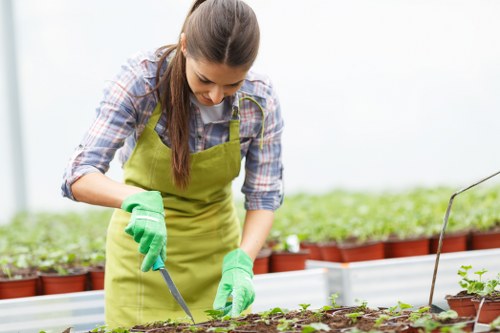 Gardeners West Ham is committed to creating an eco-friendly waste disposal area and a thriving sustainable rubbish gardening area across the neighbourhood. Our approach combines practical waste separation, local partnerships and greener transport to reduce landfill, boost reuse and return nutrients to soil. As West Ham gardeners, we balance active gardening services with robust recycling practices to keep gardens productive and the borough cleaner.
We work with residents and community groups to make recycling easy and visible. Our programmes emphasise clear bin signage, on-site sorting for green waste, and transfer of reusable materials to community schemes. The project supports both small-scale communal composting and larger municipal flows, aligning with the borough's wider waste separation approach that encourages separate collections for food waste, dry recycling (paper, card, plastics, metals) and residual waste.
 To support operational logistics we coordinate with local transfer stations and materials-recovery facilities. Nearby facilities serving East London, such as Beckton transfer points and the East London MRFs, are central to getting sorted waste to the right place quickly. We also maintain a directory of drop-off and collection points for garden waste, wood, soil, turf and bulky biodegradable materials so that Gardeners in West Ham can reduce haulage and double-handling.
Practical Actions: From Green Waste to Low-Carbon Collections
Gardeners, West Ham teams prioritise reuse and circular solutions. We partner with local charities and community projects to ensure useful garden items avoid the skip: tools, plant pots, reclaimed paving, and good soil. Partnerships include community food-growing projects, reuse centres, and social enterprises that accept reclaimed timber and usable topsoil. These links keep materials in productive use and support social outcomes in the borough. Our collection fleet is moving to low-carbon vans and smarter route planning. By introducing electric and hybrid vans, charging at community hubs and scheduling multi-stop pickups around transfer station routes, we cut emissions from garden-clearance operations. Low-carbon vans reduce local air pollution and help Gardeners West Ham deliver a more sustainable service; we also trial cargo bikes for small loads in dense residential areas to further limit vehicle miles.
Sustainable Rubbish Gardening Area: Sorting, Composting and Reuse
The sustainable rubbish gardening area prioritises diversion of organic material from landfill. Composting and mulching are core: leaves, grass cuttings and small branches are processed on-site where safe, or at partner composting facilities. Larger green waste is chipped and routed to community woodbanks or used as biomass where appropriate. Key activities include:- On-site and community compost bays for food and garden organics
- Segregation of inert materials (soil, stone) for reuse in landscaping
- Donation of reusable pots, planters and tools to charities
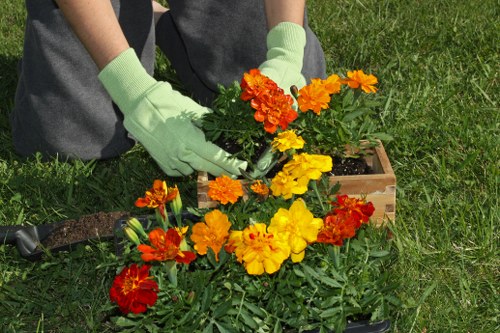 Community engagement is central: West Ham gardeners run seasonal drop-off days, teach simple sorting practices, and coordinate volunteers for reuse drives. We work closely with local charities and non-profit reuse centres so that serviceable items are inspected, cleaned and passed on rather than thrown away. This model reduces waste and supports local causes, creating a circular loop between clearing gardens and bolstering community projects.
We set an ambitious recycling percentage target to measure progress. Our goal is a 65% recycling and reuse rate for garden-related waste by 2030, with interim targets of 50% by 2026. These targets focus specifically on garden organics, timber and reusable fixtures diverted from residual streams. Progress is tracked through tonnage recorded at transfer stations, material recovery facility reports and partner receipts, so that Gardeners in West Ham can report clear, verifiable improvements in performance.
 Monitoring and continuous improvement are ongoing. We adapt to the borough approach to waste separation—encouraging residents to use food waste caddies, paper and card recycling, and separate green bins—while tailoring collection plans to local streets and communal gardens. To support this we provide clear signage, seasonal reminders and simple, repeatable sorting steps for volunteers and contractors. Respect for local systems ensures that materials are routed correctly to transfer stations and recycling centres rather than contamination-prone residual loads.
Gardeners West Ham promotes sustainable landscaping practices too: using reclaimed materials, selecting low-maintenance native plants, and designing gardens that reduce waste over time. By combining efficient, low-carbon transport, strong charity partnerships, local transfer station coordination and measurable recycling targets, we aim to create an effective, long-term model for an eco-friendly waste disposal area and a truly sustainable rubbish gardening area in West Ham and neighbouring boroughs.

